
playing out in southern Switzerland: Swiss now pray that glacier will stop shrinking.
MORE from the "do as I say not as I do" crowd: Lawmakers' Global-Warming Trip Hits Tourist Hot Spots.
Saturday, August 8, 2009


Friday, August 7, 2009
Walking sticks...

are fascinating insects - at least to me - in the Order Phasmatodea. Here's an image (click to enlarge) of a couple of stick insects that I caught, uh, coupling, near the entrance to Bracken Cave in Texas a while ago.
Kepler Space Telescope beginning to yield...
science results: Kepler Detects an Exoplanet Atmosphere. While this is not necessarily groundbreaking news, it does bode well for the huge return of data anticipated by this mission in search of Earth-like planets orbiting other stars.
World to end in...
November when the Large Hadron Collider (LHC) restarts, though at only half its energy potential.
Promises, promises.
Promises, promises.
Thursday, August 6, 2009
Creepy fungus...
 takes a page from the movie Alien. That's the fungal reproductive stalk growing out of the head of the dead ant. Read about the parasitic fungus Ophiocordyceps unilateralis if you dare (it may give you nightmares.)
Hey, it's the circle of life.
Image courtesy David Hughes/ScienceNews
Units of measurement...
with a humorous twist. My favorite is the counter unit to the light year: the beard-second.
RELATED: I instructed the biology students on our recent field excursion to the volcanic terrains in the southern Cascades that, if they had difficulty recalling the difference between basalt, andesite or rhyolite, just simply call the rock a rhyoandesalt and they couldn't be wrong.
RELATED: I instructed the biology students on our recent field excursion to the volcanic terrains in the southern Cascades that, if they had difficulty recalling the difference between basalt, andesite or rhyolite, just simply call the rock a rhyoandesalt and they couldn't be wrong.
Methane mystery on Mars...
gets more mysterious. In sum, Martian methane is produced and destroyed at a faster rate than on Earth. Moreover, it's not evenly distributed in the atmosphere, but occurs in concentrated regions on the red planet. Link to technical abstract.
Wise words...
We shall not cease from exploration
And the end of all our exploring
Will be to arrive where we started
And know the place for the first time.
— T. S. Eliot, The Four Quartets
Wednesday, August 5, 2009
A report from the field...

from the Nebraska Star Party by the Bu bro, with an included image of my 12-y-o niece silhouetted by the glow of the aurora borealis:
"NSP was pretty nice. The weather was threatening the first night but did clear up around midnight. We didn't have much stamina that night so only stayed until about 0100. The next two nights were very good. Tuesday night we saw the Northern Lights, a first for me. Not wavy curtains or anything exceptionally cool, but neat to see and contemplate.I can personally attest that star parties are a lot of fun, and one of the best occurs in Washington each summer - the Table Mountain Star Party.
Here is a photo inspired and composed by J; I pulled the trigger. 30 seconds exp, so she is a bit blurry. Northern Lights. They did not look that green, but to the camera sensor, I guess it was."
Bone thieves should be wary...
of a new geo-forensic technique that links the looted fossils to specific excavation sites.
It would be additionally helpful if these scofflaws would face serious criminal penalties once caught, rather than getting off lightly.
It would be additionally helpful if these scofflaws would face serious criminal penalties once caught, rather than getting off lightly.
The Perseids are coming...
as Earth begins to move through debris shed by Comet Swift-Tuttle. The annual meteor shower should peak sometime on 12 August but full enjoyment this year may be dampened by the glow of the gibbous Moon.
MORE: Geogal, a regular reader and commenter on this blog, points to this from Spaceweather.com:
MORE: Geogal, a regular reader and commenter on this blog, points to this from Spaceweather.com:
"This year's Perseid meteor shower could be even better than usual. "A filament of comet dust has drifted across Earth's path and when Earth passes through it, sometime between 0800 and 0900 UT (1 - 2 am PDT) on August 12th, the Perseid meteor rate could surge to twice its normal value," says Bill Cooke of NASA's Meteoroid Environment Office."UPDATE: From the Bu bro this morning via e-mail... "FYI, I just returned last night from being away to YNP [Yellowstone National Park.] Saw an incredible fireball shooting east to west over Lamar Valley. Longest, brightest, greenest, smokiest I have ever seen, with some fragmentation at the terminus." Cool! Maybe a harbinger of this years' shower.
This handsome...

Something to look forward to...
this fall and winter: WHO maintains 2 bln estimate for likely H1N1 cases . That's one-third of the world's population that will likely contract the swine flu.
Tuesday, August 4, 2009
Arriving in the mail...
today is yet another book, The Adventure Climbs of Herb & Jan Conn by Lindsay Stephens, a gift from the Bu parents. Thanks!
I met Herb and Jan a few years back while working at Jewel Cave National Monument on a caving project and they are quite extraordinary people. Now on in their years, Jan was the first woman to climb Devils Tower in Wyoming by a technical route in 1948, and together they explored and mapped more than 60 miles of cave passages in Jewel Cave.
I met Herb and Jan a few years back while working at Jewel Cave National Monument on a caving project and they are quite extraordinary people. Now on in their years, Jan was the first woman to climb Devils Tower in Wyoming by a technical route in 1948, and together they explored and mapped more than 60 miles of cave passages in Jewel Cave.
Arriving in the mail...
today is a copy of James Pigott's book A View of the Methow from Moccasin Lake Ranch. In fact, it's a gift from the author himself to express his appreciation of my participation in the Zegraham expedition to Norway and Svalbard last month.
Gratefully appreciated, Jim, and I look forward to sailing with you and your wife again sometime.
Gratefully appreciated, Jim, and I look forward to sailing with you and your wife again sometime.
New digital camera...
comes outfitted with a built-in projector: Nikon's COOLPIX S1000pj. I've got to wonder about the battery life.
So, does it make a good cup of coffee too? That's what I want in a next generation camera.
So, does it make a good cup of coffee too? That's what I want in a next generation camera.
An image of Earth from space...
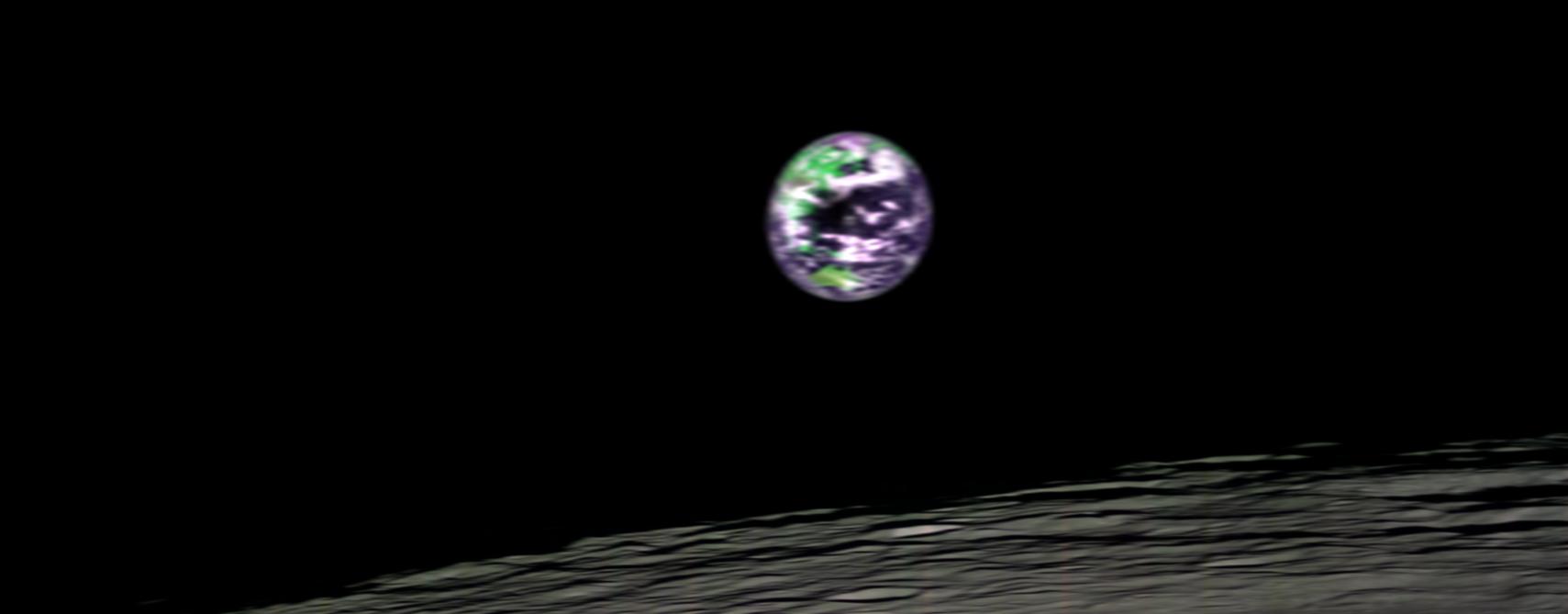 as captured by NASA 's Moon Mineralogy Mapper in lunar orbit (click to enlarge.) "Australia is visible in the lower center of the image. The image is presented as a false-color composite with visible oceans a dark blue, clouds are white, and vegetation an enhanced green. The data were acquired on July 22, 2009."
Image credit: NASA/JPL/Brown.
Bat killing white-nose fungus...
gets a formal name: Geomyces destructans. Here's the link to a brief news story (third article.)
Giant marine worm...
burrow casts found in Ordovician strata in central Spain. The ancient worms were up to three feet in length and occupied "horizontal galleries 15 feet long and 6-8 inches in diameter under the seabed."
I always wondered where the worms in the movie Tremors came from; now we know.
I always wondered where the worms in the movie Tremors came from; now we know.
Monday, August 3, 2009
Large earthquake in Baja, Mexico...
.jpg)
Whiner alert...
Grad Sues College for $70,000 Because She Can't Find a Job
Hmm. I wonder what her grade point average was? Her personal hygiene? Number of facial tattoos and/or piercings? Attitude?
Hmm. I wonder what her grade point average was? Her personal hygiene? Number of facial tattoos and/or piercings? Attitude?
Peace through superior firepower...
this summer: potato guns and nerf weapons. Personally, I favor the potato gun since you don't have to retrieve the ammo once it's fired. Just thinking tactically.
Previous related post.
Previous related post.
Keep an eye on..
the Philippine volcano Mayon (hey, that rhymes.) Why? The Philippine Institute of Volcanology and Seismology (PHIVOLCS) indicates that gas emissions are above background and increasing.
Asteroid Watch...
is a new web site operated by JPL/NASA to provide a centralized resource for information on near-Earth objects. To kick things off, here are the top ten asteroid facts posted on the site.
UPDATE: Check out this disturbing technical note and the related abstract.
UPDATE: Check out this disturbing technical note and the related abstract.
Sunday, August 2, 2009
A hearty breakfast...

consisting of rice cake, peanut butter, gravel/pumice, mosquitoes and pine needles (all the major food groups) starts every day in the field. Crunch. Crunch. Gulp. Yum!
Image credit: Professor J. Thomson
Image credit: Professor J. Thomson
There's nothing stupider...
than being a professional astronomer and missing the object that hit Jupiter. Well, that is certainly an overstatement but at least it rhymes. But in reality they did get trumped by an amateur in discovering the most important event to occur in the solar system in the last 15 years, so now they're playing catch up:
Astronomers Look for Clues in the Wake of the Jupiter Collision.
My previous related posts are here and here.
Astronomers Look for Clues in the Wake of the Jupiter Collision.
My previous related posts are here and here.
Mini-mammal tracks discovered...
in the Jurassic-age Glen Canyon Formation in Dinosaur National Monument, Utah. The linked article includes images of a footprint, no larger than a dime.
Hat tip: LS
Hat tip: LS
Saturday, August 1, 2009


One of the grandest...

junipers in Oregon, estimated to be between 600 and 700 years old. It's about 64 ft tall with a diameter of 5.5 ft, and it stands all alone amid ponderosa pine and sagebrush on the southeastern flank of Newberry Volcano. Good luck trying to find it amid a confusing network of logging roads!
In a word: awesome.
In a word: awesome.
Maars and tuff rings...

Hole-in-the-Ground, a related volcanic feature termed a maar is located nearby and is shown in the image below (click to enlarge):

One might notice a small fault that offsets the basalt unit in the far side of the structure.
Newberry Volcano caldera...

as viewed from the summit of Paulina Peak (7,969 ft/2,429 m elevation) lies in south-central Oregon and within Newberry Volcano National Monument (click to enlarge.)
The rim of the Newberry caldera forms the surrounding skyline and it contains East Lake (distant right) and Paulina Lake (left) with the Central Pumice Cone separating the two water bodies. The very obvious Big Obsidian Flow is approximately 1,300 years old and consists of volcanic glass and pumice, the product of a very "dry" rhyolitic lava flow.
The rim of the Newberry caldera forms the surrounding skyline and it contains East Lake (distant right) and Paulina Lake (left) with the Central Pumice Cone separating the two water bodies. The very obvious Big Obsidian Flow is approximately 1,300 years old and consists of volcanic glass and pumice, the product of a very "dry" rhyolitic lava flow.
Happy birthday...
to the Bu bro. Another lap around the Sun has been completed, and another one begins.
I've sent him this fun book as a gift.
I've sent him this fun book as a gift.
While I was away...
some interesting items were published on the web. Here they are, in case you missed them:
- Scientists Drill a Mile Into Active Deep Sea Fault Zone
- Fermi Paradox Points to Fewer Than 10 Extraterrestrial Civilizations
- Mosquitoes deliver malaria 'vaccine' through bites
- Laser Propulsion: Wild Idea May Finally Shine
- Mysteriously High Tides on East Coast Perplex Scientists
- Organic food is no healthier, study finds
Our terrific crew...

We're posed at the Cloudcap Overlook on the east side of Crater Lake which, of course, is really a caldera lake. All of the smiling faces is the real deal - how could one not be joyful and actively engaged in outdoor learning in such a spectacular setting?
Crater Lake is an azure jewel...

ensconced in the southern Oregon Cascade Mountains and this mini-panorama - shot from the summit of Mount Scott - hardly does it justice (click to enlarge.) We have just returned with 20 students (the same number we left with!) from a week-long biology/geology field trip that examined this interesting volcanic region.
I'll spend this weekend reviewing my images and post some of the more interesting items on this blog. Stay tuned.
I'll spend this weekend reviewing my images and post some of the more interesting items on this blog. Stay tuned.
Subscribe to:
Posts (Atom)
